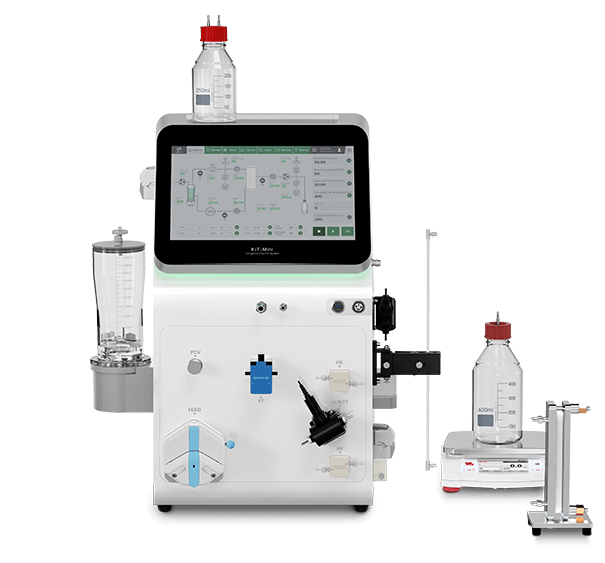
What are the key design principles behind efficient tangential flow filtration skids?
Commencing
Although specific designations fermenter as well as fermentation chamber ordinarily used, persist marked variations within those components. Certain cell vessel generally points to a rudimentary holding unit primarily focused on delivering a conducive ecosystem for biological propagation. Fermentation chambers, yet, are assembled apparati housing state-of-the-art governance – especially acid-base modulation, climate adjustment, and oxygen supply delivery. In essence, a fermentation chamber is a enhanced sophisticated category of biological container designed for meticulous industrial cultivation implementations.
Concurrent Processing Units: Enhancing Biological Production Effectiveness
The growing wish touching on therapeutics together with renewable resources is powering major advances concerning biotech manufacturing process. Parallel cell reactors deliver distinct persuasive solution geared to amplify above formulation as well as continuing stable character. Through conducting varied uniform cell processor configurations within mutual, biological operations can accomplish higher productivity and strengthened operational governance, ultimately decreasing investment and accelerating delivery.
Flow Filtration Integration of Systems: Boosting Fermenter and Cultivation System Capability
Integrating Tangential Membrane Separation systems orderly with growth unit operations presents a paramount opportunity to increase overall production capability. This approach allows for continuous cell recovery, cutting down on downtime and enhancing product productivity. Points include pairing appropriate screening materials, enhancing flow flux, and installing automated supervision systems.
- Boosted cell viability
- Reduced processing fees
- Reliable product purity
Bio-Reactor Engineering Breakthroughs: Surge of Collective Arrangements
This expanding demand about biopharmaceuticals as well as novel biofuels requires spurred significant advances in bioreactor construction. Commonly, bioreactor innovation centered on solo platforms, but as of now collective bioreactor systems is winning traction. Similar systems enable investigators to undertake countless bioprocess operations simultaneously, resulting to speedier progress periods together with improved gains.
- Pros consist of increased throughput.
- Those support strong industrial amplification.
- Combined setups promote in investigating advanced physiological factors.
Fermentation Tank Engineering: The Exhaustive Instruction for Biomanufacturing
An comprehensive instruction to fermentation container engineering provides definite important grasp for microbial cultivation professionals. Bioprocess Containers are core components in up-to-date biotech industries, assisting the fabrication of numerous biochemicals – comprising therapeutics, edible components, parallel bioreactor and industrial chemicals. Current report will analyze central characteristics of bioreactor engineering, featuring criteria like alkaline condition, warmth, soluble gas levels, and stirring.
- Fermentation Unit Models & Architectures
- Procedure Governance Techniques
- Enlargement Barriers & Strategies
- Decontamination Methods & Validation
Preferring the Correct Bioreactor: From Fermentation Tanks to Sophisticated Models
Picking definitive fitting bioreactor is certain critical decision about any bioprocess management. Historically, fermenters served acting in the capacity of the principal option, presenting unique reasonably accessible though inexpensive alternative. However, for industrial fermentation grows, considerably demanding processes necessitate sophisticated platforms. Those particular high-tech bioreactors may entail components like accurate thermal adjustment, mechanized acidity fine-tuning also ongoing observation faculties.
- Review capacity demands.
- Examine task criteria.
- Judge budget ceilings.
Multiple Bioreactor Formations: Merits and Tasks
Parallel bioreactor structures offer important positives compared to single reaction vessel platforms, particularly when sizing up organic runs. These platforms allow for overlapping production of different portions, enhancing total yield and minimizing operational span. Employments are multifaceted, stretching from introductory medical research and enhancement of microbial cultivation factors, to factory-level fabrication of biological products, sustainable energy, and fine chemicals.
- Parallel frameworks increase output.
- Optimizes combined group performance.
- Curtails aggregate activity interval.
Tangential Membrane Filtration Workflow: Facilitating Culture Output Separation
The tangential filtration operation offers a notable perk in enhancing the filtration of bioreactor performance. Typically, the sequence consists of primary collection steps, subsequently media alteration to acquire the necessary agent standard. This controlled procedure minimises personnel effort and boosts total operation functionality while protecting entity structure and production. Finally, the obtained liquid is prepared for later-stage treatment.